
Reviewed · FOOD & DRINK
Historical 18th Century Estate Tour with Coconut Tasting
History has a taste here. Morne Coubaril Estate gives you a short, hands-on look at St Lucia’s plantation past, with replica stick huts, a grand estate house, gardens, and demonstrations involving coconut, cocoa, coffee, and sugar cane. I especially like the fresh coconut water tasting and the chance to see how much manual work goes into processing cocoa and coconuts.
I also like the setting near Soufriere and the low $12 price, which makes this an easy addition to a day of sightseeing. The main caution is timing: the tour is described in different places as about 30 minutes and about one hour, and some visits feel rushed or depend heavily on the guide leading your group.
In This Review
- Key points to know before you go
- What Morne Coubaril tells you about St Lucia
- Starting among the stick huts
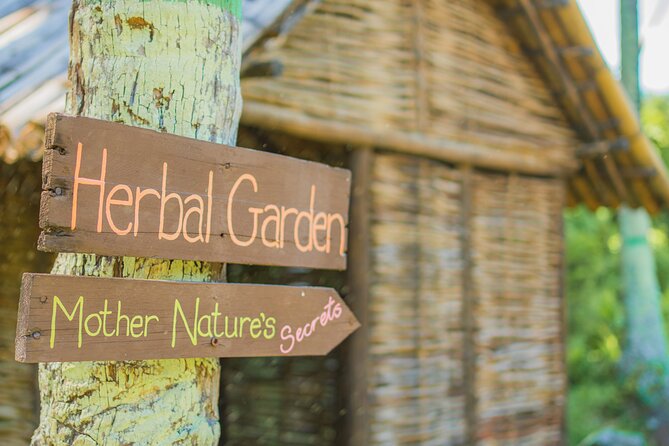
- Walking through the herb and plant gardens
- Visiting the Monplaisir family estate house
- The coconut demonstration and tasting
- The cocoa and coffee house
- The mule-driven sugar cane mill
- The viewpoint and the estate setting
- How long the tour really takes
- What the $12 price includes
- Who will enjoy this visit most
- Practical advice for a better visit
- Should you book Morne Coubaril Estate?
- FAQ
- Where does the tour start?
- What time does the tour start?
- How long does the tour last?
- Is admission included?
- Does the tour include hotel pickup?
- Is lunch included?
- Are alcoholic drinks included?
- What will I taste during the visit?
- Is the tour suitable for children?
- Can someone with walking difficulties take the tour?
- What is the cancellation policy?
Key points to know before you go
- Fresh coconut is the star tasting: Watch a skilled coconut de-husking demonstration, then try coconut water, jelly, and sometimes coconut meat or candy.
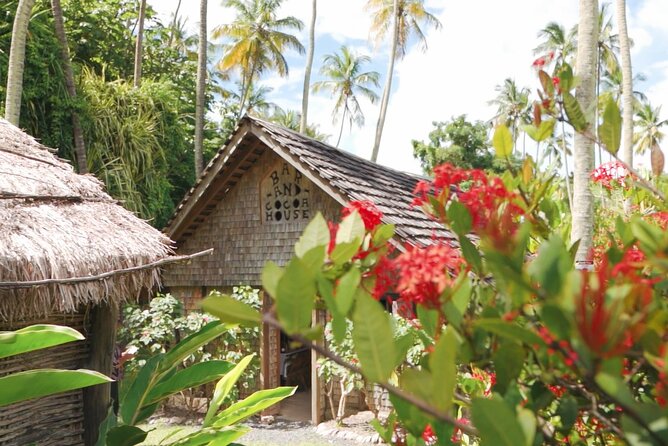
- The cocoa demonstration is unusually hands-on: You can see drying, fermentation, grinding, and the cocoa dance used to polish the beans.
- The replica village adds human scale: Stick huts show how island residents may have lived in the 1700s, rather than presenting only a grand plantation house.
- The gardens are part of the lesson: Native plants, herbs, fruit, and spices help explain how people used the estate’s natural resources.
- A mule-driven sugar mill keeps the past moving: You can watch the mill operate and sample fresh sugar cane juice.
- The tour suits curious, mobile visitors: It is not recommended for people with walking difficulties or visual impairments, and children must stay with an adult.
What Morne Coubaril tells you about St Lucia
Morne Coubaril Estate is more than an old house with a pleasant garden. The visit shows how an 18th-century estate depended on crops, animals, tools, workers, and practical knowledge.
That matters because plantation history can feel abstract when you only see a restored building. Here, you move from the village replicas to the gardens, processing areas, estate house, and sugar mill. Each stop connects daily life with the work needed to produce food and trade goods.
The experience also gives you a broader view of St Lucia’s past. Sugar, cocoa, coffee, and coconut were not just products. They shaped work, household life, cooking, trade, and the use of the surrounding land.
You should keep the setting in perspective, though. The stick huts are replicas, not original homes, and some of the demonstrations are staged for visitors. That does not make them worthless, but it means you are seeing an educational recreation rather than an untouched 18th-century settlement.
More history tours in St Lucia:
- Nature & Historical Horseback Riding Tours St. Lucia
★ 4.5 · 54 reviews - Essence of St Lucia Heritage Experience
★ 5.0 · 5 reviews
Starting among the stick huts
Your guide meets you at a set point inside Morne Coubaril Estate in Soufriere. The walk begins in a small recreated village with stick huts modeled on homes associated with island residents in the 1700s.
This is a useful first stop because it shifts your attention away from the plantation owner’s house. You see a simpler side of estate life, with buildings intended to show how ordinary residents lived and worked.
The huts also give the guide a chance to explain the community around the estate. Listen closely here, since the quality of the storytelling can shape the entire visit. Guides such as Natasha, Jonathan, Vincia, Noelita, and Sendyann have been praised for making the history easier to follow and for answering questions with patience.
Still, do not expect a long museum-style presentation. The visit is compact, and groups may move on quickly. If you are interested in the social history, ask questions early rather than waiting until the end.
Walking through the herb and plant gardens
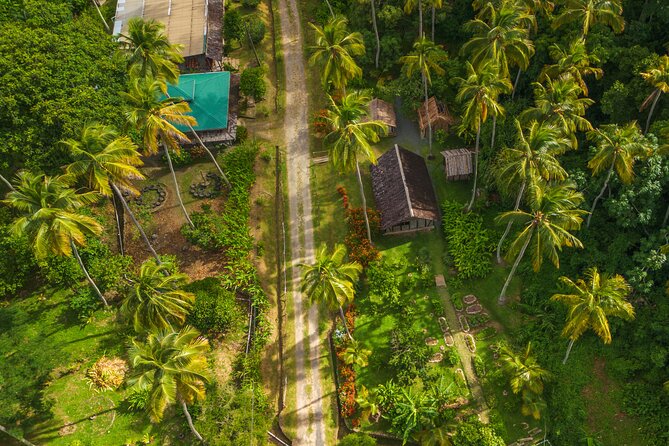
From the village, the route passes through gardens filled with plants, trees, flowers, herbs, and fruit associated with St Lucia. The exact plants you see can vary, but the guide points out herbs used for illness and minor injuries.
I like this part because it makes the estate feel practical. These plants were not simply decoration. They could provide food, flavor, medicine, or materials, and the garden shows how much island life depended on what grew nearby.
You may also receive small samples along the route. Past tastings have included basil, mango, tamarind, sugar cane, and other local treats, though the precise selection is not guaranteed. If you enjoy food traditions, this section may be as interesting as the formal history.
The garden walk is also one of the easier parts for photographs. You can take pictures of the vegetation and estate buildings, but keep in mind that the route is outdoors and walking is required. Anyone who finds uneven or extended walking difficult should think carefully before booking.
Visiting the Monplaisir family estate house
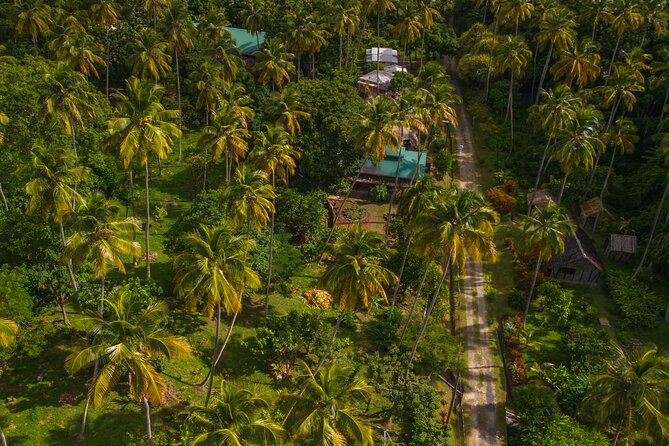
The Monplaisir family estate house is the property’s architectural centerpiece. It gives you a picture of the more formal side of estate life and contrasts sharply with the small village huts.
The house is appealing even if you are not an architecture enthusiast. Its scale, age, and setting help explain the difference between the people who owned or managed the estate and the workers whose lives are represented in the village.
Do not expect a lengthy indoor tour based on the information provided. The house is one stop within a broader guided walk, so the emphasis is on seeing the building and understanding its place on the estate.
This contrast is one of the strongest parts of the visit. The grand house and modest huts sit within the same story, and seeing both helps you ask better questions about labor, social rank, and the way the estate functioned.
More food tours in St Lucia:
- St. Lucia Food and Rum Tour – Taste authentic St. Lucian Food and Culture
★ 5.0 · 204 reviews - St Lucia Rum Tasting and Tour
★ 4.5 · 91 reviews - Rodney Bay Food Tour by LUCIAN FOOD TOURS
★ 5.0 · 76 reviews - St Lucia Bamboo Rafting Experience (+Rum Tasting)
★ 5.0 · 28 reviews
The coconut demonstration and tasting
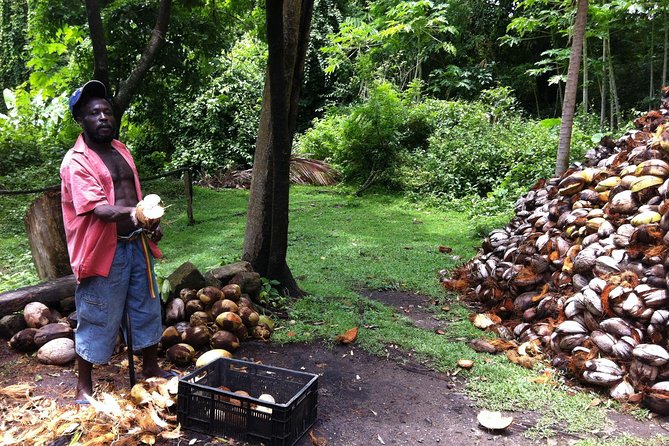
The coconut stop is likely to be the most memorable part of the tour. A skilled worker demonstrates how to remove the husk by hand, a difficult job that looks simple only after years of practice.
You then learn about drying the coconut meat to make copra. The tour explains how the drying process worked, including the use of an oven associated with the estate. This is a good reminder that a coconut is not just a holiday drink. It can be processed into useful products through several labor-intensive steps.
The tasting usually includes coconut water and the soft jelly inside a young coconut. Depending on the visit, you might also taste coconut meat or coconut candy. Some past samples have included marshmallow coconut and other sweet coconut treats.
I would not rush this stop. Watch the technique, ask what part of the coconut is being used, and compare the fresh taste with the processed products. The tasting is small, but it connects the tool demonstration to something you can immediately understand.
One practical point: the coconut tasting is included in the experience as described, but extra food, rum, chocolate, or lunch options are separate matters. Do not arrive assuming the $12 fee includes a full meal or every tasting offered at the estate.
The cocoa and coffee house
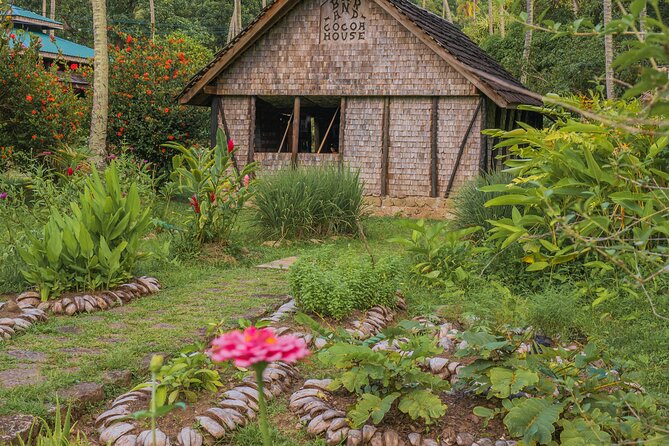
The cocoa and coffee house shows how beans were prepared before they became familiar drinks or chocolate. You can see the beans being fermented and dried, then watch the cocoa dance, a traditional polishing process performed by moving across the beans.
The demonstration continues with grinding, and you can taste a ripe cocoa bean. A raw cocoa bean does not taste like a chocolate bar, so this is a useful little food lesson. It shows how much processing is needed before the flavor most people expect appears.
This stop earned some of the strongest praise because it turns a common product into a physical process. You see the work, hear the explanation, and taste the ingredient at an early stage.
The coffee connection is included in the estate story, but the supplied details focus more heavily on cocoa than on a separate coffee tasting. If coffee is your main interest, ask your guide what will be shown on the day of your visit.
Guides make a major difference here. Natasha has been singled out for explaining the cocoa process clearly, while Jonathan has been praised for answering questions and keeping the tour informative. Names and assignments can change, but asking your guide to explain each stage will make the stop more rewarding.
The mule-driven sugar cane mill
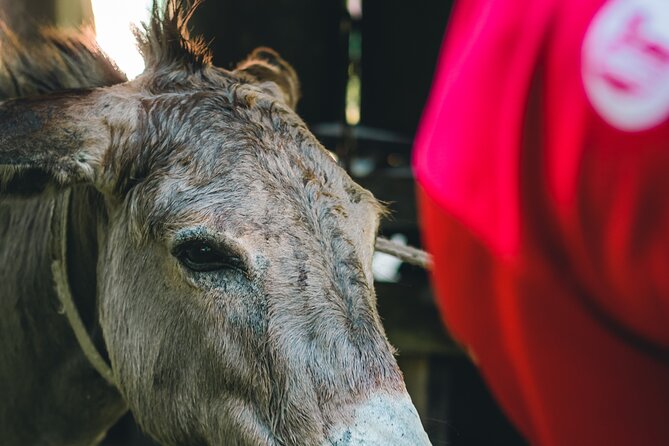
The sugar cane mill is operated by a donkey or mule, with the animal turning the machinery as cane is crushed. You can watch the process and sample fresh cane juice.
This is a simple demonstration, but it gives you a clear picture of how older estates used animal power. The mill also provides a welcome change after the cocoa and coconut stops, since you are seeing another crop processed in a different way.
The juice is a typical island refreshment and is included among the tastings described for the visit. If you are sensitive to sweetness, take a small sample first. The point is less about having a large drink and more about connecting the crop in the field with the finished liquid.
Some people may find the pace or presentation too slow, while others appreciate the chance to watch a working mill. The animal-powered setup is worth seeing, but the demonstration may feel more observational than interactive.
The viewpoint and the estate setting
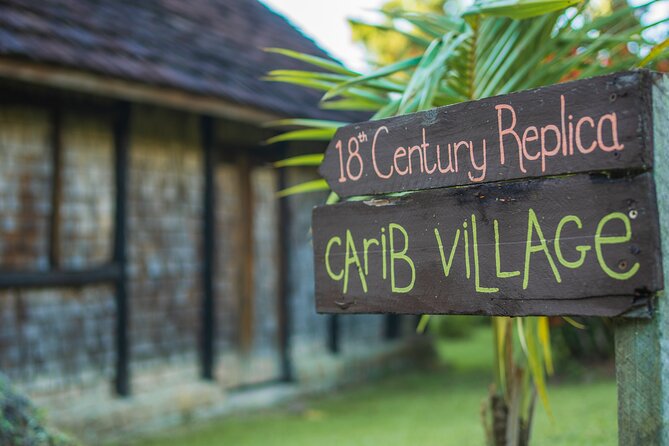
The route includes a viewpoint with dramatic views over the surrounding area. This is a natural pause after the processing demonstrations and a good place to take photographs.
The setting is one of the estate’s strongest assets. You are not moving through a closed museum. You are walking among gardens, buildings, plants, and open views in the Soufriere area.
Weather can affect the experience. Rain has interrupted visits, and the estate may not provide umbrellas or rain gear. Bring protection if the forecast looks uncertain, since the tour is largely outdoors and the included services do not list rain equipment.
The viewpoint also helps you understand why the estate was more than a group of buildings. The crops, gardens, and working areas were connected to the land around them, and the view makes that relationship easier to grasp.
How long the tour really takes
The timing needs a little explanation. The detailed visit is described as a one-hour guided tour, while the summary and stop information list about 30 minutes. Past visits have also lasted around 1.5 to 2 hours when lunch or additional tastings were added.
For planning, I would allow at least one hour for the core estate experience and extra time if you intend to eat or purchase optional rum and chocolate tastings. Do not schedule a tight connection immediately afterward.
The start time provided is 9:00 a.m., and the activity ends back at the meeting point. There is no hotel pickup or drop-off, so you need to arrange your own transport to Morne Coubaril Historical Adventure Park.
The property is near public transportation, and the meeting point is the estate itself. Cruise passengers can fit it into a wider island outing, but you should leave enough time for transport between Soufriere and the ship.
What the $12 price includes
At $12 per person, the core tour offers good value if you want a short cultural stop rather than a full-day excursion. Your fee includes the local guide and entrance to the estate, along with the demonstrations and tastings described as part of the visit.
I like the price because it lets you add some substance to a day in Soufriere without committing to an expensive package. The gardens, estate house, village replicas, cocoa, coconut, and sugar mill provide several different experiences in one stop.
The value becomes less clear if you expect a polished museum or a long, deeply detailed lecture. The presentation depends on the guide, and some visits have felt scripted, rushed, or too passive. A strong guide can make the same route engaging, while a weak one can make it feel like a series of routine stops.
Lunch is not included. Food may be available to purchase separately, but reports about the meal are mixed, ranging from excellent Creole chicken and fish to disappointing buffet dishes. I would treat lunch as an optional extra, not a reason by itself to book the estate tour.
Alcoholic drinks are also not included. Rum tasting may be available for an added fee, and chocolate tasting is offered separately in some arrangements. Ask about the exact cost before ordering.
Who will enjoy this visit most
I would recommend Morne Coubaril to you if you like short historical walks, local food samples, botanical gardens, and demonstrations of traditional work. It is especially useful for a first visit to St Lucia because it introduces several parts of island culture in one place.
Families can enjoy the tastings and the donkey-powered mill, but children must be accompanied by an adult. The experience works well for cruise passengers and anyone already visiting Soufriere who wants an activity that does not take an entire day.
You should be comfortable walking outdoors. The experience is not recommended for people with walking difficulties or visual impairments, and the information provided does not promise special assistance.
You may be disappointed if you want a fully immersive role-playing experience, extensive original artifacts, or guaranteed hands-on work. Most of the activities involve watching demonstrations, tasting samples, and listening to the guide.
Group size can reach 100 people. A large group may make it harder to hear, especially if you are standing at the back. Try to stay near the guide during each demonstration and speak up if you miss an explanation.
Practical advice for a better visit
Arrive ready for an outdoor walk. Wear comfortable shoes, carry water, and bring rain protection if the weather looks unsettled. The estate does not list umbrellas or raincoats as provided equipment.
Keep your schedule flexible. The core tour may take 30 minutes or closer to an hour, and a longer visit is possible if you add lunch or tastings.
Ask for explanations rather than simply following the group. Questions about the workers’ village, medicinal herbs, copra, cocoa fermentation, and the sugar mill can turn a quick tour into a much more useful history lesson.
If you are especially interested in guides, names associated with positive experiences include Natasha, Jonathan, Vincia, Noelita, and Sendyann. You cannot assume a particular guide will be available, but polite questions at arrival may help you understand who is leading your group.
The mobile ticket is convenient, and confirmation is provided at booking. Free cancellation is available up to 24 hours before the 9:00 a.m. start time. Changes or cancellations made within 24 hours are not refunded.
Should you book Morne Coubaril Estate?
Book it if you want a reasonably priced, compact introduction to St Lucia’s plantation culture, especially if coconut water, cocoa, gardens, and traditional machinery appeal to you. The combination of tastings and live demonstrations gives the visit more life than a simple walk around an old house.
I would skip it if you dislike outdoor walking, want guaranteed shelter in wet weather, or expect lunch and rum tasting to be part of the $12 ticket. I would also avoid building an important connection around the advertised 30-minute estimate, since the actual visit can run longer.
For most people spending time in Soufriere, this is a sensible add-on. Its best moments are simple: fresh coconut water, a raw cocoa bean, cane juice from the animal-powered mill, and a guide who can connect those samples to the people and work behind them.
FAQ
Where does the tour start?
The tour starts at Morne Coubaril Historical Adventure Park, Morne Coubaril Estate, St Lucia, in Soufriere.
What time does the tour start?
The listed start time is 9:00 a.m.
How long does the tour last?
The information gives different estimates. The detailed description says about one hour, while the summary lists about 30 minutes. Allow extra time if you add lunch or other tastings.
Is admission included?
Yes. Entrance to the estate and the local guide are included in the tour price.
Does the tour include hotel pickup?
No. Hotel pickup and drop-off are not included.
Is lunch included?
No. Lunch is not included, though food may be available to purchase separately at the estate.
Are alcoholic drinks included?
No. Alcoholic drinks are available to purchase but are not included in the ticket price.
What will I taste during the visit?
The listed tastings include coconut water and coconut jelly, ripe cocoa beans, and fresh sugar cane juice. Other samples, such as coconut candy or fruit, may also be offered.
Is the tour suitable for children?
Children can participate, but they must be accompanied by an adult.
Can someone with walking difficulties take the tour?
The experience is not recommended for people with difficulty walking. It is also not recommended for people with visual impairments.
What is the cancellation policy?
You can cancel up to 24 hours before the start time for a full refund. Cancellations or changes made within 24 hours are not refunded or accepted.
Just added in St Lucia
- St Lucia: Hewannora (UVF) Private Airport Transfer★ 5.0 · 1 review
- Pigeon Island Excursion★ 4.0 · 1 review
- Saint Lucia Private East Coast Tour★ 5.0 · 2 reviews
- Transportation To St. Lucia Zipline Adventure★ 5.0 · 1 review
- Vigie Beach Round Trip Transfer★ 3.0 · 1 review
- Hewanorra Airport Private Transfers (UVF)★ 3.5 · 3 reviews
- Hewanorra (UVF) Private Airport Transfer (one way)★ 5.0 · 6 reviews
- UVF Luxury Transfers & Fast Track – Celebrate Special Occasions (Round trip)★ 3.0 · 2 reviews
Food & Drink, compared.
St. Lucia Food and Rum Tour – Taste authentic St. Lucian Food and Culture
Read our review →


St Lucia Bamboo Rafting Experience (+Rum Tasting)
Read our review →

Castries Market Walking Food Tour by LUCIAN FOOD TOURS
Read our review →
Soufriere Excursion with Rum & Chocolate Tasting
Read our review →Browse the lists this tour appears in